Monday, March 19, 2012

First Day in the 2012 Garden

There isn't a whole lot going on in the backyard in March, but with the highs consistently in the 70's for a few weeks (what, global warming?) we had to get out into the garden to do some work. Here's how the garden looked before we started to wake it up from its winter nap yesterday.


The garlic, however, seems to have woken up on its own just fine. This is great, as it's the first year I've planted garlic and I was concerned that I hadn't planted it in optimal soil conditions.

The day's work included weeding one of the garden beds. Grass seems to find its way from the paths to the beds constantly. We've got a project underway to take care of that, but that's for another blog post, when we're hopefully much further along.

After weeding what I could see, I removed our winter "comforter compost" (just a covering of last fall's yard waste) from half the bed and found some more grass and weeds. After quickly taking care of them, it was off to find the compost.

We have a compost pile against the fence at the back of our garden, but I haven't been very good about turning it and I don't currently have a screen to sift it. So, much of this year's compost will be purchased. I covered a 4' x 8' section of one bed with three 3/4 cubic yard bags of composted manure. I didn't even mix it in; just arranged it on top. Over time, the rain will seep through and mix the compost into the soil. Also, the soil is still a little wet, so the inch or so layer of compost gives me some soft ground to plant in.

Speaking of planting, I decided I couldn't waste this great weather and had to experiment by planting some of my cool-weather crops, which I normally wouldn't plant for another month. This year I'm using the square foot gardening method for most of my beds. Last year I planted in rows, and I felt like I wasted a ton of space. Since I'm new to this, I wanted a physical reminder of what a square foot looks like. I got out some twine and a staple gun and created a square foot grid.


The grid only covers 8' of the 16' bed, as I didn't need to plant the other portion yet and I wanted to leave the comforter compost to do its work.

With the grid laid out, I planted:

  • Knight Peas (2 squares of 16)
  • Sugar Lace Peas (2 squares of 16)
  • Toppers Turnips (1 square of 9)
  • Tokyo Cross Turnips (1 square of 9)
  • Cherry Belle Radishes (1 square of 16)
  • Easter Egg Radishes (1 square of 16)
  • French Breakfast Radishes (1 square of 16)
  • Boltardy Beets (1 square of 16)
  • Early Wonder Beets (1 square of 16)
  • Crosby Egyptian Beets (1 square of 16)
  • Pine Tree Lettuce Mix (2 squares of 4)
  • Arugula (2 squares of 9)
  • Dash Spinach (1 square of 9)
If all goes well, I'll be eating from the garden in mid-April. Considering I don't have any winter plantings, that's a Wisconsin miracle!

The other garden news is we have a new acquisition: a heavy-duty garden cart. We found this little baby on sale at Lowe's for $50. Great deal, and a great way to haul stuff around the garden and avoid extra trips to the garage.

Saturday, March 17, 2012

Seed Starting Extravaganza

Today I started the herbs I planned to: thyme, basil, sage, parsley, oregano, and celery.

I also started plants I had planned to start to weeks later. The weather has been so warm (it's been in the seventies), I anticipate being able to plant things out earlier. So, I also started tomatoes, peppers, eggplant, broccoli, head lettuce, and zinnias.

I also gave the onions a haircut - they were getting scraggly. Now they're only four inches tall. I wasn't planning to plant them out for another month, but if the weather holds that will happen much earlier.

I also made a run to Stein's and picked up 6 bags of compost, 3 cubes of straw, some bone meal, fish emulsion, and plant labels. Tomorrow I'll amend at least one bed and plant peas and other cool weather crops, which I wasn't planning to plant for another month.

It's possible we'll still get frosts (even snow), but I can always replant. If we don't, I don't want to miss this opportunity to get a head start on the Wisconsin garden season.

Sunday, February 26, 2012

Windowsill Herb Garden

Back in November (we had a really mild fall) I salvaged some herbs from the garden to bring inside throughout the winter. As an experiment, I also direct seeded some basil, thyme, oregano, and cilantro to see if it would grow inside in the winter.

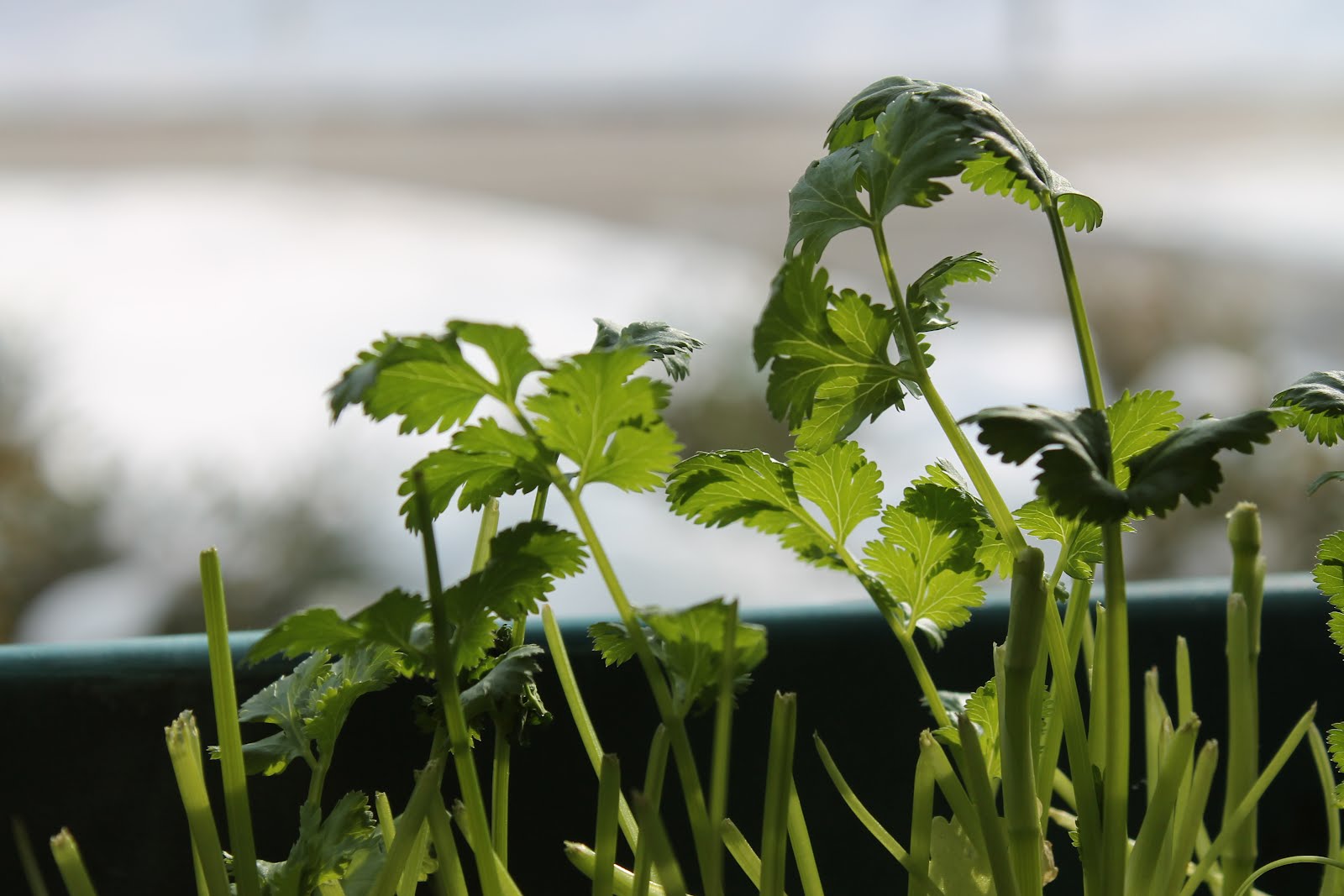
Of all the direct seeded herbs, only the cilantro grew enough for me to use it (so far - the thyme and oregano are fighting). I harvested all of the cilantro on Wednesday night for a black bean chili recipe. It's already coming back!


I also salvaged two rosemary plants - one that was growing in a container, and one that was in a too-shady space next to the house. The plant from the container is thriving, while the plant from the ground is limping along. Check out all the new growth on the container plant:


The blog may be light on updates for awhile. I'll post about my onions sometime this week, but then I'm off to South by Southwest and I won't be starting any more seeds until March 17.

Wednesday, February 15, 2012

First Sprouts

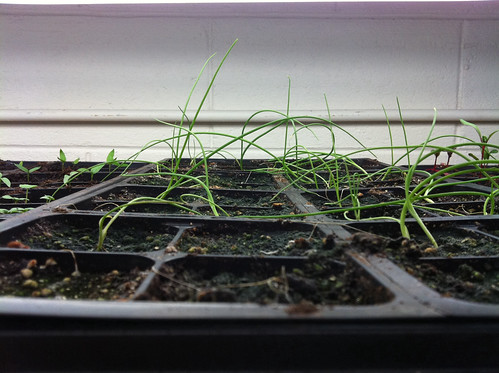
I saw my first onion sprouts this morning. I thought I might have been hallucinating yesterday. When I checked the seed tray, I swore I smelled onions. Now that they have sprouted, I definitely do. Crazy!

The first to sprout was Sweet Spanish (3 days).

Sunday, February 12, 2012

Starting Onions, Leeks & Chives

The 2012 Gross Farms garden has officially started. Last year my onions starts were pretty sad. I meticulously put 1-2 seeds in each cell, over watered, failed to fertilize, and started them too late.

Hopefully this year will be different. According to the University of Wisconsin Extension planting calendar, onions should be started indoors on February 15, so I'm only a few days early. I planted each variety in one 4-inch pot instead of messing around with individual cells. Basically I followed the method in this video.

Here's what went into the pots:
  • One 2012 package of yellow sweet spanish onion (Pinetree Garden Seeds)
  • One 2012 package of red wing onion (Pinetree Garden Seeds)
  • Remainder of 2011 package of yellow of parma onion (Seed Savers Exchange)
  • Remainder of 2011 package of blue solaise leek (Seed Savers Exchange)
  • Remainder of 2010 package of Chinese garlic chives (Botanical Interests)
There's nothing very picturesque to photograph, but hopefully I'll have good news when they start to germinate.

This almost feels like a false start, since after this planting I wait four weeks until I start my next round of seeds.

Sunday, December 11, 2011

2012 Garden Planning

There's not a speck of snow on the ground, but I'm already well into my 2012 garden planning. I have 384 square feet of raised bed space, and approximately 30 feet of fence line that's perfect for growing pole beans. I definitely didn't maximize my space in 2011, and I'm hoping to do much better next year.

I've done a better job planning the timing of things, and I expect at least two beds to receive two waves of planting this year (and hopefully a cover crop as well).

I received five seed catalogs (Seed Savers Exchange, Johnny's, Pinetree Gardens, Vermont Bean Seed Company, and Totally Tomatoes). Last year I ordered every thing from SSE, but I think I'm going to go with Pinetree Gardens this year. I still have seeds for lots of things, so there will be zucchini, tomatoes, and peppers that don't need to be ordered.

Based on a few hours of planning this evening, I'm likely going to place the following order:

Pole Beans
  • Kentucky Wonder (66 days)
  • Rattlesnake (65 days)
  • Purple Trionfo Violetto (60 days)
Dry Beans
  • Jacob's Cattle (83 days)
  • Vermont Cranberry (85 days)
Beets
  • Boltardy (46 days)
  • Early Wonder (50 days)
  • Crosby Egyptian (45 days)
  • White Albino (57 days)
Carrots
  • Rainbow (57 days)
  • Lunar White (55 days)
  • Adelaide (65 days)
  • Red Cored Chantenay (75 days)
Chard: Prima Rosa (25-50 days)

Cucumbers
  • Homemade Pickles (54 days)
  • Spacemaster (59 days)
Eggplant
  • Slim Jim (60 days)
  • Black Beauty (83 days)
Lettuce
  • Pinetree Lettuce Mix (40 days)
  • Freckles (70 days)
Melon
  • Banana (80 days)
  • Minnesota Midget (60 days)
Onions
  • Yellow Sweet Spanish (107 days)
  • Red Wing (110 days)
Peas
  • Knight (56 days)
  • Sugar Lace (65 days)
Peppers
  • Big Red (75 days)
  • Sweet Banana (72 days)
  • Hot Portugal (65-75 days)
Radishes
  • Cherry Belle (21 days)
  • French Breakfast (25 days)
  • Easter Egg (28 days)
Spinach: Dash (39 days)

Tomatoes
  • Polbig (54 days, determinant)
  • Heinz Classic Processor (75 days, indeterminant)
  • Matt's Wild Cherry (55 days, indeterminant)
Turnips
  • Toppers (35 days)
  • Tokyo Cross (30 days)
Summer Squash
  • Eight Ball Zucchini (35 days)
  • Papaya Pear (40 days)
Herbs
  • Borage
  • Chervil
  • Zefa Fino Fennel
Cut & Come Again Zinnias


Once I place the order, I'll need to create my seed starting and planting schedule. Winter's not too bad after all :)


Saturday, November 26, 2011

Soy Beans

I did not plan to harvest dry soy beans this year. The plan was to have a nice supply of fresh edamame. Well, while we were on our honeymoon the plants got a bit past that point and began to dry on the vine. I pulled them in late July or early August, and just let them sit on the porch under a tent to dry. Then in maybe September my mom was visiting and got sick of looking at them, and pulled the pods off the plants and left them in a bag. I think I brought that bag inside in late October or early November.

Needless to say, I did not really set up ideal conditions for drying and shelling soybeans. During this process, about 30% of the beans rotted. Instead of getting pretty beans like this:


I got a bunch of pods that looked like this:


After over an hour of work, I shelled what was once an 8 foot row of soybeans, and ended up with this:


That's an entire half-sheet baking pan of dried shells and rotted beans, and 1 1/4 cup of beans to the right.


This jar is destined for the freezer to kill anything that might be hiding in it. Then I need to figure out how to use these soybeans. Any ideas?

Next year I might actually grow some shelling beans, but I'll be a bit more intentional.